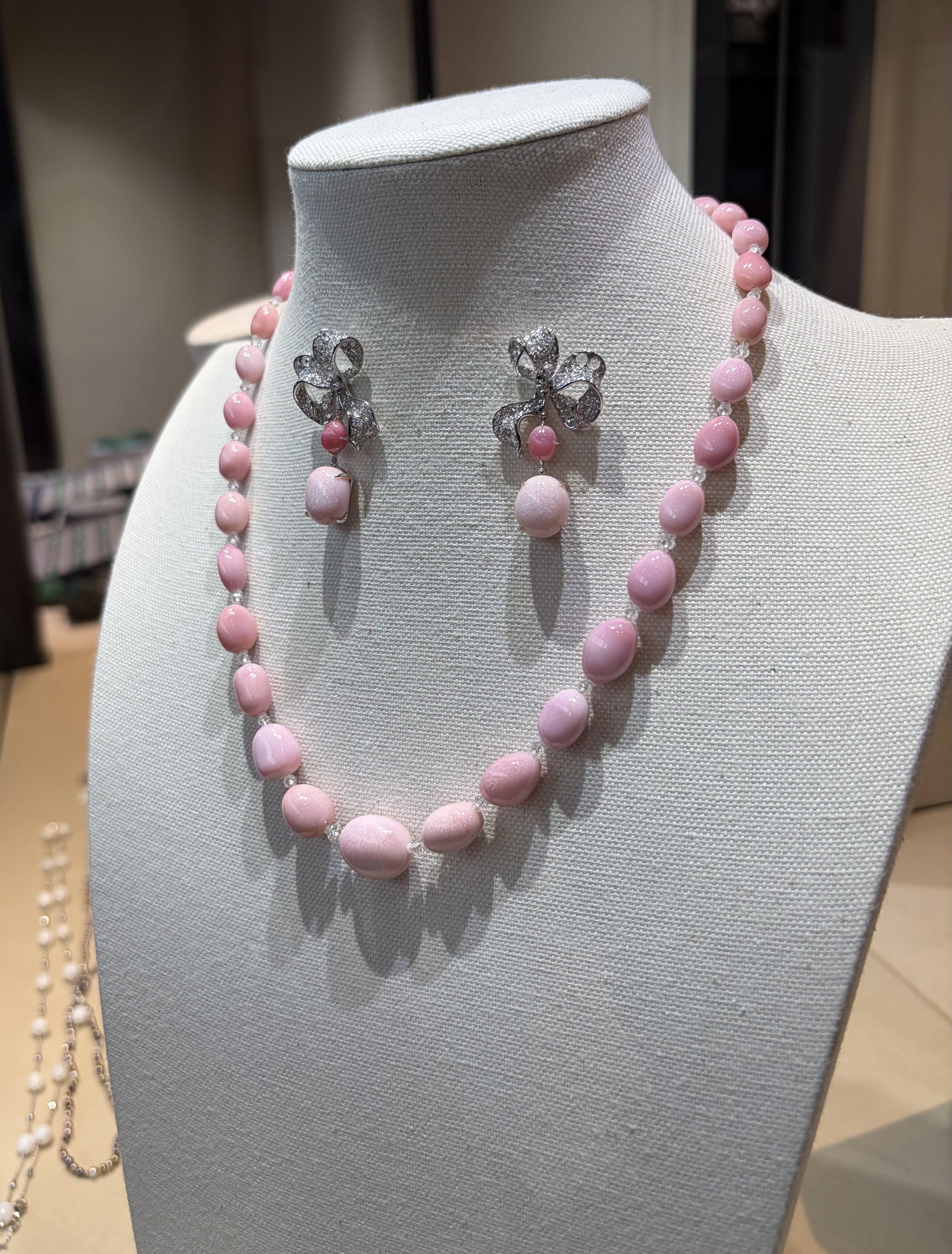
Pronounced “konk.” That matters, because most people get it wrong, and it sets the tone for how poorly understood these gems actually are.
The conch pearl forms inside the Queen Conch, Lobatus gigas, a large gastropod mollusc found in the Caribbean and along the Atlantic coasts of Central and South America. It is non-nacreous: no mother-of-pearl, no iridescent lustre. Instead, the surface has a porcelain quality and a phenomenon called flame structure, where microscopic calcium carbonate fibres arranged in concentric layers scatter light in a way that appears to move across the surface. When it is strong and visible to the naked eye under normal light, flame structure can elevate a pearl’s value beyond its size or colour alone.
Pearl formation is an accident. A natural irritant triggers the animal to secrete a calcite-based material unique to the species. Approximately one in 2,000 Queen Conch will produce a pearl. Fewer than 10% of those are gem quality. One in 100,000 yields a truly exceptional specimen.
One in 100,000 yields a truly exceptional specimen.
They cannot be farmed. The spiral structure of the conch shell, unlike the double-hinged shell of an oyster, makes reaching the pearl-forming organ extremely difficult. Commercial survival rates sit between 40 and 60%. No viable aquaculture exists, and none is coming.
Conch pearls are found by chance, as a byproduct of fishing for meat and shell. The species has been listed on CITES Appendix II since 1992. Florida banned commercial harvest in 1986. Multiple Caribbean nations followed. Supply is not going to increase.
Colour is the primary value factor after size. The range runs from white and cream through yellow, honey, olive, and many gradations of pink. Pink commands the market. The three main categories are Sakura (pure pink, the most sought-after), Salmon (warm orange undertone), and Flamingo (deeper red). Sakura at medium depth is the benchmark.
Gem-quality specimens typically weigh between 2 and 6 carats. Conch pearls are measured in carats, not millimetres. Anything above 8 carats is considered exceptional. The largest known example weighs 45 carats. Harry Winston set it, and Elizabeth Taylor wore it on the cover of Good Housekeeping.
A matched pair of gem-quality conch pearls is a once-in-a-career find.