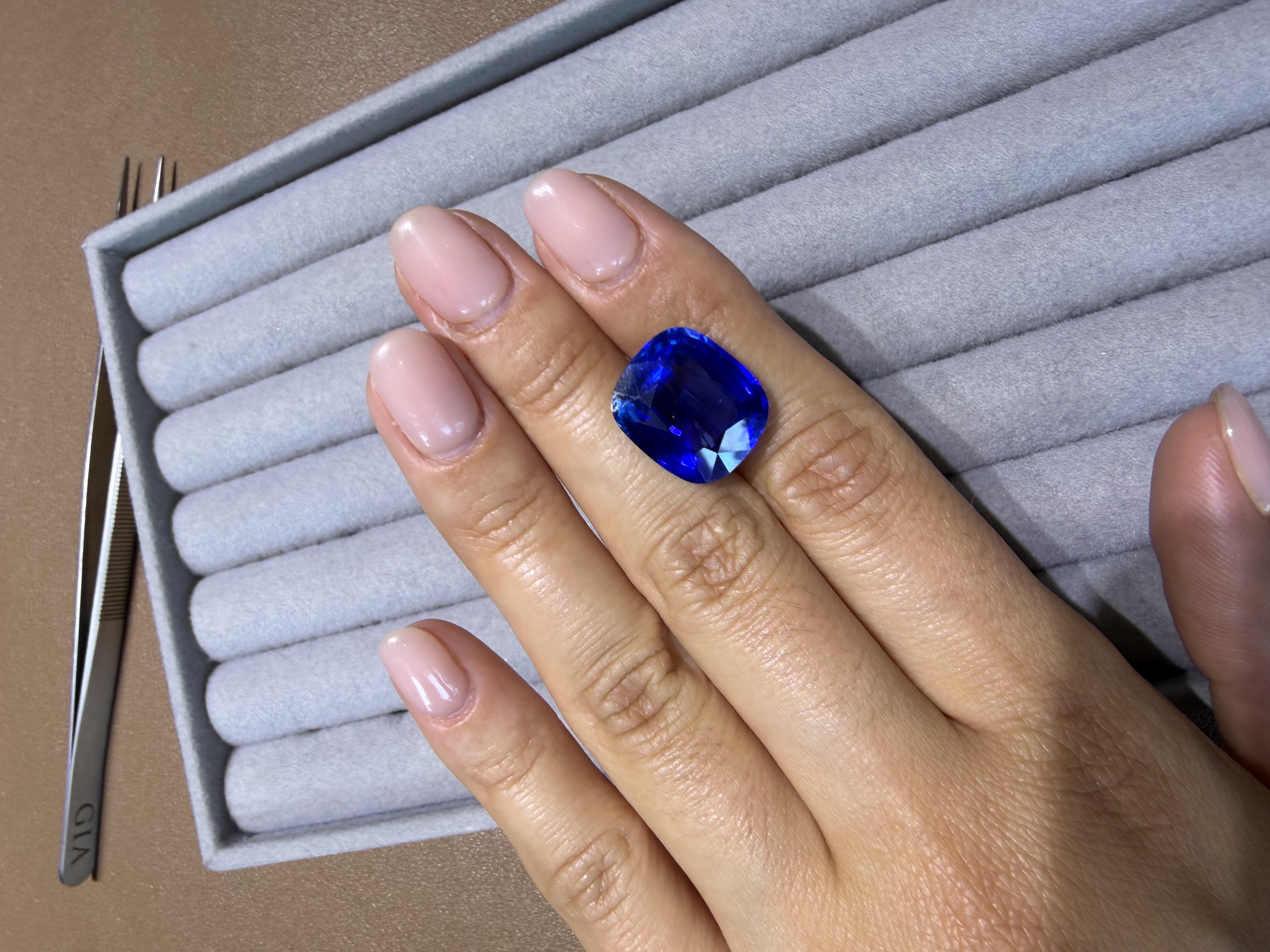
Ruby and sapphire are the same stone. I love telling people this.
Ruby and sapphire are both corundum. The same mineral, the same crystal structure, the same stone. Colour is the only thing that separates them. In its pure form corundum is colourless. What creates colour is the presence of trace elements, and even the smallest amount can completely change the stone. Chromium produces red, which creates a ruby. Every other colour, blue, pink, yellow, orange, violet, gets called sapphire.
The line between ruby and pink sapphire isn't scientific, it's commercial, and the gem trade argues about it constantly. A stone with enough chromium to read as red commands a ruby premium. Shift it slightly towards pink and it becomes a pink sapphire, often worth considerably less. The colour grading that separates them is subjective, which is why two respected laboratories can look at the same stone and reach different conclusions.
Ruby
The most celebrated rubies come from Burma. There is a quality to Burmese red, sometimes called pigeon's blood, that has given them a premium over stones from other origins for centuries.
That doesn't mean a Burmese ruby is automatically the finest stone in the room, but origin matters to buyers and it matters to price.
Sapphires come in almost every colour corundum can produce. The blue most people picture comes from Kashmir, Burma or Sri Lanka, but these are not equal. Kashmir sapphires have a velvety effect to their blue that no other origin has matched, but the mine produced for only around six years in the late 19th century. A certified Kashmir stone commands some of the highest prices in the coloured gem market. Burma and Sri Lanka produce exceptional stones too, but Kashmir is in a category of its own.
There are also yellow sapphires, colour change sapphires that shift between blue and violet depending on the light, and padparadscha, a peachy pink-orange that is one of the most contested and beautiful colours in gemmology.